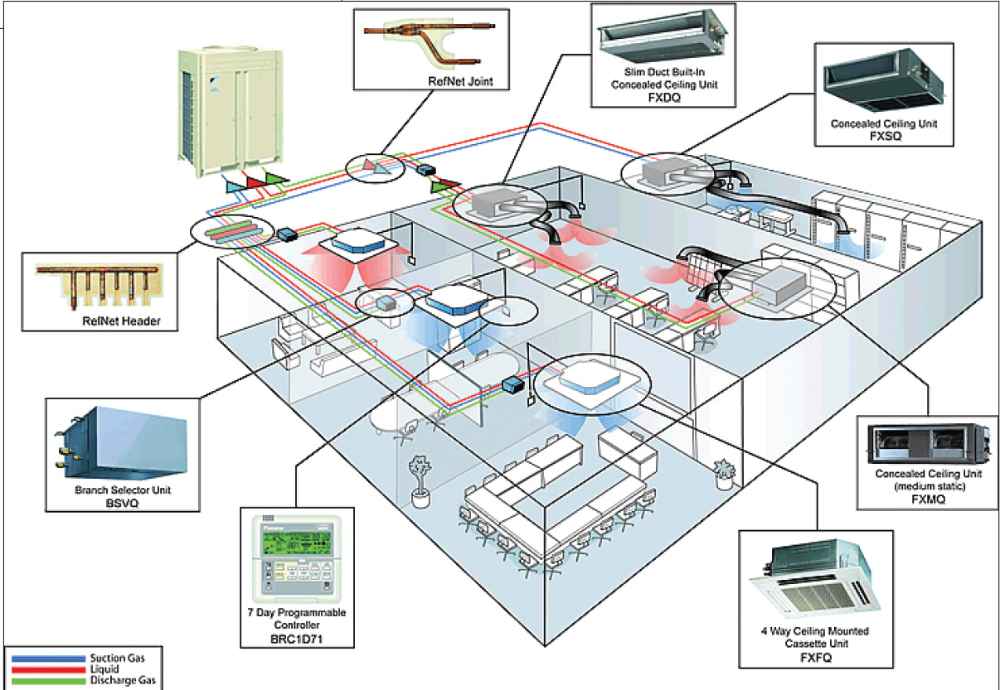
What are chiller fan coil systems and what are they used for?
A chiller-fan coil system is an HVAC (heating, ventilation, and air conditioning) system that is commonly used in commercial and large residential buildings for cooling and heating. This system typically consists of a chiller unit, which is responsible for cooling the water, and fan coil units (FCUs), which are located inside the building to distribute the conditioned air. Here is an overview of the system along with its advantages and disadvantages:
Components of a Chiller-Fan Coil System:
Chiller:
A chiller is a central unit that cools water to a low temperature. It uses a refrigeration cycle to remove heat from the building.
Fan coil units (FCUs):
Fan coil units are installed in various spaces in a building, such as individual rooms or zones. These units contain a coil through which chilled or heated water from the chiller flows. Fans in the FCU then distribute the conditioned air throughout the space.
Ducting:
Ducts are used to circulate chilled or heated water between the chiller and the fan coil units.
Advantages of Chiller-Fan Coil Systems:
Zoning Capability:
Chiller-Fan Coil systems offer zoning capabilities, allowing individual temperature control in different areas or rooms. This is beneficial for energy efficiency and personal comfort.
Energy Efficiency:
Chiller-Fan Coil systems can be energy efficient, especially when equipped with a variable speed motor and other modern controls. A central chiller allows for the use of large, efficient cooling equipment.
Flexible Design:
The system is flexible and can be designed to meet the specific needs of different buildings and spaces. It is often suitable for both new construction and retrofit projects.
Ease of maintenance:
Maintenance work such as chiller servicing or fan replacement can often be performed without disrupting the entire system. Modularity makes system maintenance more manageable.
Quiet operation:
Fan units are generally designed to operate quietly, which contributes to a comfortable indoor environment.
Space saving:
The absence of large ductwork can result in space savings, making chiller-fan coil systems suitable for buildings with limited space.
Disadvantages of Chiller-Fan Coil Systems:
Upfront cost:
The initial installation cost of a chiller-fan coil system can be relatively high compared to other HVAC systems, especially in smaller buildings.
Design Complexity:
Designing and installing a chiller-fan system can be complex, requiring careful consideration of factors such as load calculations, piping layouts, and control strategies.
Chiller Maintenance:
While fan coils are modular and allow for easier maintenance, the chiller unit may require more specialized maintenance and service.
Water Quality Control:
The quality of the water circulating in the system is critical to preventing problems such as corrosion or bacterial growth. Proper water treatment and maintenance are essential.
Potential for Leaks:
Because chiller-fan coil systems involve circulating water, there is the potential for leaks in the piping system, which can cause water damage if not addressed promptly.
To summarize, chiller-fan coil systems offer flexibility and energy efficiency, especially in large buildings with varying cooling and heating needs. However, they require careful design, installation, and maintenance to ensure optimal performance and to address potential challenges. Consulting with HVAC professionals and engineers during the planning and installation phases is essential for a proper chiller-fan system.